
Key takeaways
- Office atmosphere is an important factor in employee well-being and productivity.
- Small office changes can make a big difference to how well the atmosphere contributes to employee collaboration, mood, and morale.
- Consider these five office decor ideas to improve your workplace’s environment.
Does your office atmosphere contribute to productivity, collaboration, and overall employee well-being? Which elements of your office design promote inclusion, creativity, and a sense of employee satisfaction? Which areas, including your lobby, department workplaces, and meeting rooms, could benefit from redesign, or at least sprucing up?
According to a recent ASID research study, innovative, human-centered workplace design impacts productivity, employee retention, and return on investment. And even if you’re not in a position to renovate your entire office space, there are small changes you can make to improve the atmosphere where you work and create a sensory-rich environment for employees. Here are some ideas:
1. Consider Color
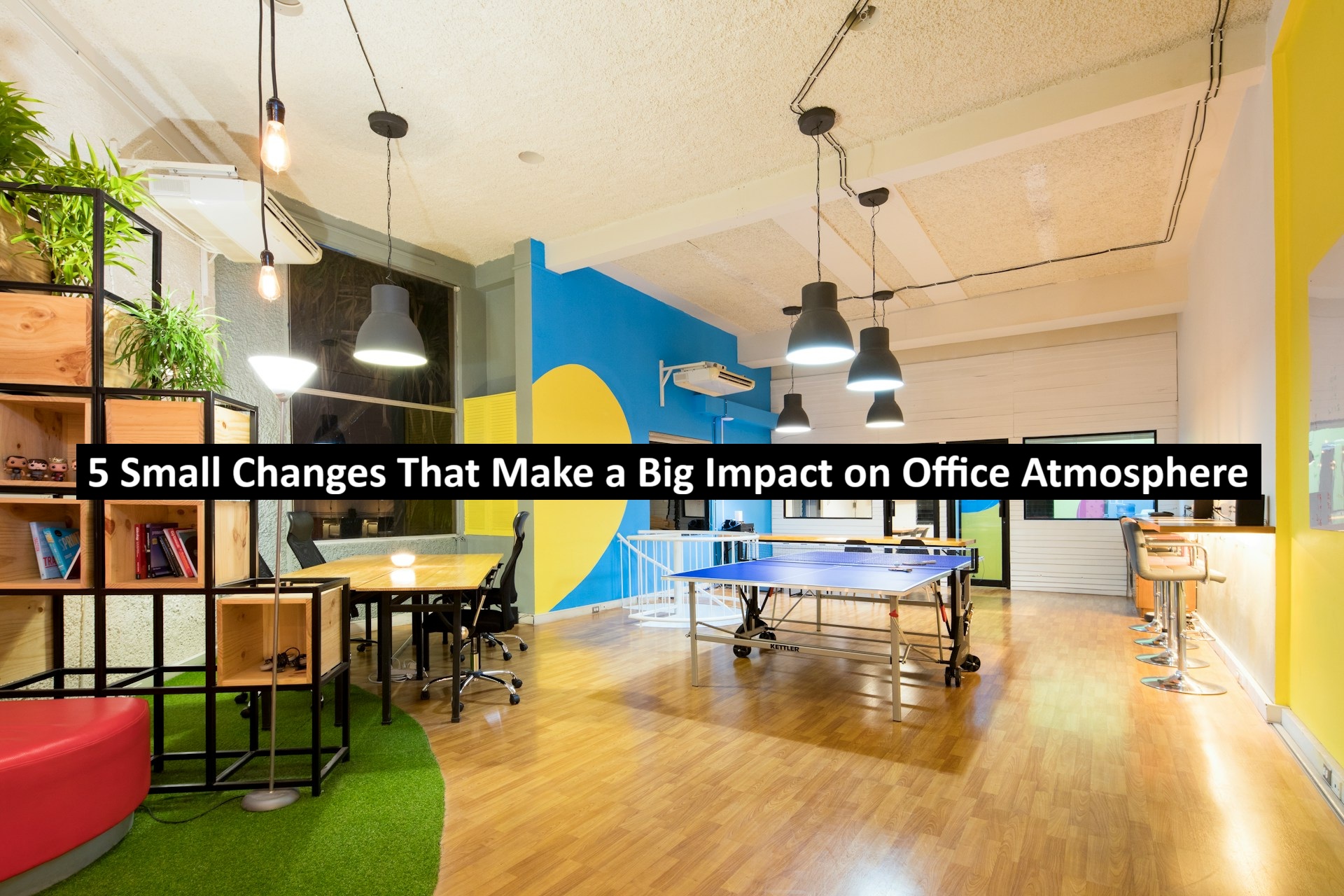
Color plays an important role in mood and psychology. Just as you represent your company logo in certain colors to evoke certain emotions and reactions, you should carefully consider color in the areas where your employees work.
According to a recent article in Work Design magazine, “Color shapes how people think, feel, and interact every day, and it’s important to view wall colors as having the same influence.”
Color Psychology
Consider color psychology in the workplace. For example, studies show that blue is a calming color that contributes to mental endurance. Red, on the other hand, excites and elevates blood flow, so why not add some red accents to the walls in a creative team’s work area? Neutral colors like taupe, gray, beige, or charcoal convey steadiness and professionalism. Just make sure you add brighter hues and textures to them so they’re not too depressing. Pure gray walls can squelch creativity, confidence, and optimism.
View color as a psychological tool to help promote certain mindsets and work functions, and choose wall colors and accents accordingly.
Read: How Marketing Data Can Help Startups Sell Smarter
2. Rearrange or Obtain New Furniture
How you arrange furniture can change the mood and function of the room. Arrange chairs in rows facing the front of a room, and employees will sit side-by-side and likely not interact much. Put the chairs in a semicircle facing inward, and you’ve created a collaborative environment.
A recent Workplace Design article addresses building inclusion in the workplace. Evaluate the extent to which your office furnishings do that. For example, do your leaders have comfortable, ergonomic seating while entry-level employees do not? Are there shared spaces with comfortable seating and access to natural light? Are hospitality, comfort, and safety conveyed in office furnishings and their arrangement?
View your office furnishings, including desks, tables, chairs, couches, and benches, from your customers’ and employees’ perspectives. If the atmosphere is not conducive to comfort and hospitality for workers and visitors, consider obtaining new furnishings and/or rearranging current furniture.
3. Enhance Lighting
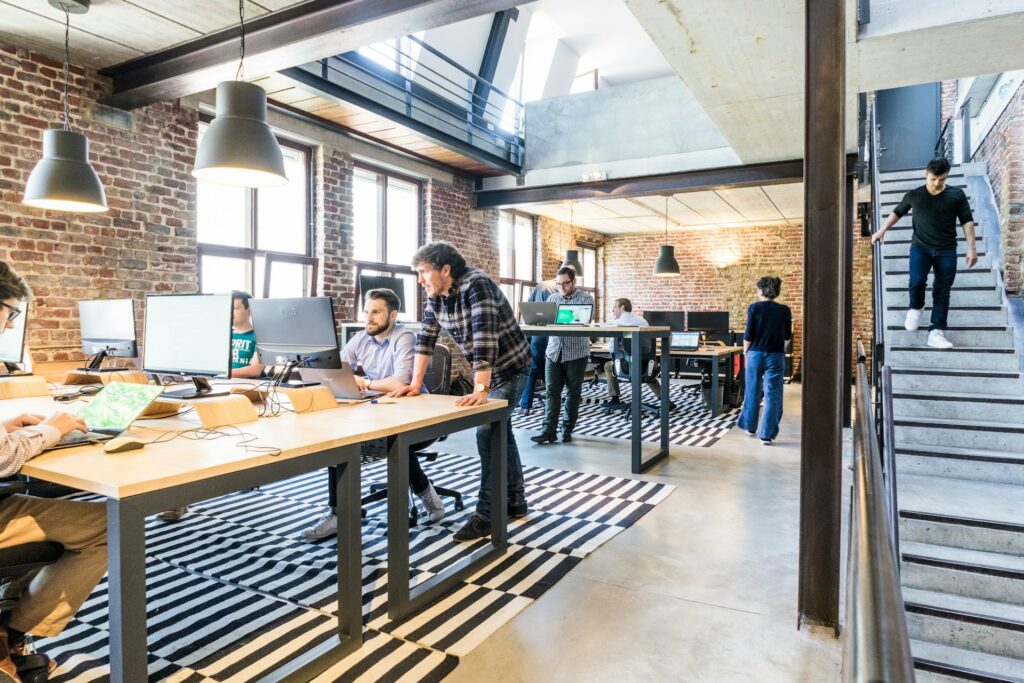
Lighting, including natural and artificial light, plays an important part in the workplace setting. Taking advantage of natural light from windows will not only enhance the atmosphere but also save on energy costs. Just be sure to consider possible glare during certain parts of the day, adding shades or blinds as necessary.
Consider different lighting types, choosing warm lighting and dimmable lights wherever possible to accommodate different employees’ sensory preferences. Harsh, industrial overhead lighting should give way to track lighting, lamps, and other options that are more flexible and work-friendly.
Strategically consider the lighting in your employees’ work areas and visitor areas, and tailor it to fit the mood you want to create and the needs of those who spend time there.
4. Adorn Walls with Architectural Finishes
Create visual interest using affordable architectural film on office walls, available in many colors and patterns. This film is often scratch-resistant and durable for long-term use, so it serves a dual purpose: decoration and protection. You can create the look of wood or marble, or simply add a little texture to an office kitchen, waiting room, or department area. Application is simple and quick, allowing you to easily transform the look of any area of your office. Use architectural film when you want to change the look of an office area quickly and affordably.
5. Incorporate Greenery
Recent years have shown an increasing interest in “green offices,” or those that work to minimize their impact on the environment. Along with practicing sustainable manufacturing and conserving energy, green offices also incorporate live greenery – plants that release oxygen and enhance the work environment.
A recent article by Wellable touts the advantages of having live plants in the workplace, including:
- Increased productivity
- Sharpened focus
- Improved creativity
- Reduced negativity and improved well-being
- Improved air quality and reduced energy consumption
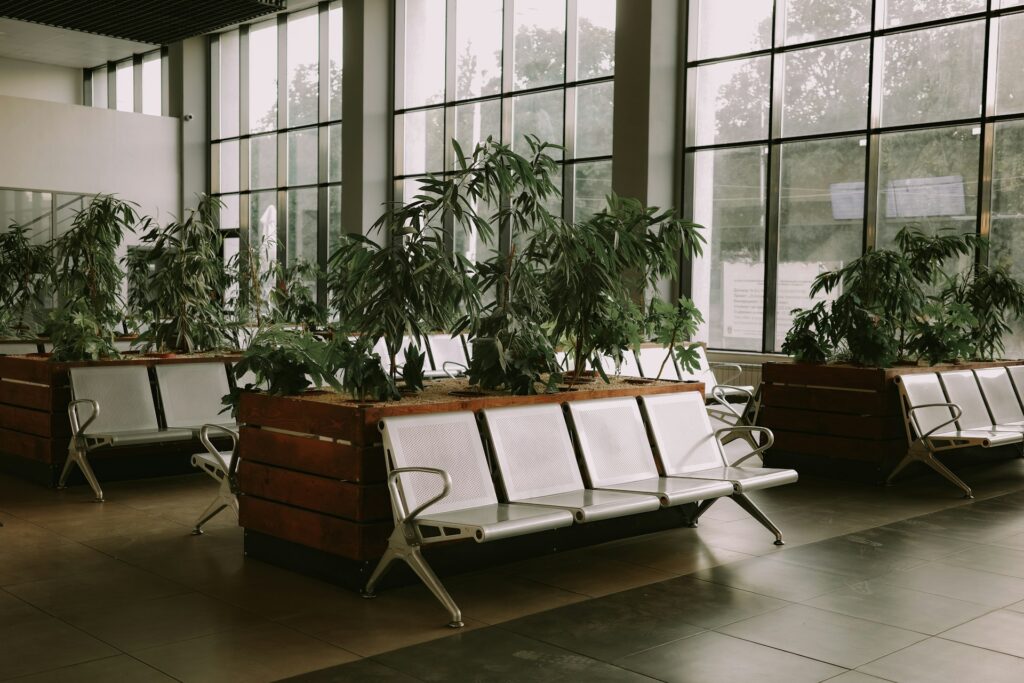
Whether you go all out and install a modular wall system with different types of greenery or add window boxes, hanging baskets, or high-impact planters with ficus trees or textured grasses, introducing greenery to your workplace will make it feel more welcoming and create an environment ripe for productivity and well-being.
Large rectangular planters and other planters that sit on the floor or ground can also help direct traffic flow in an area, block noise from the street or nearby offices, or carve out a cozy seating area in a large room or outdoor area. Strategically place large planters for high visual impact, traffic flow, and more.