
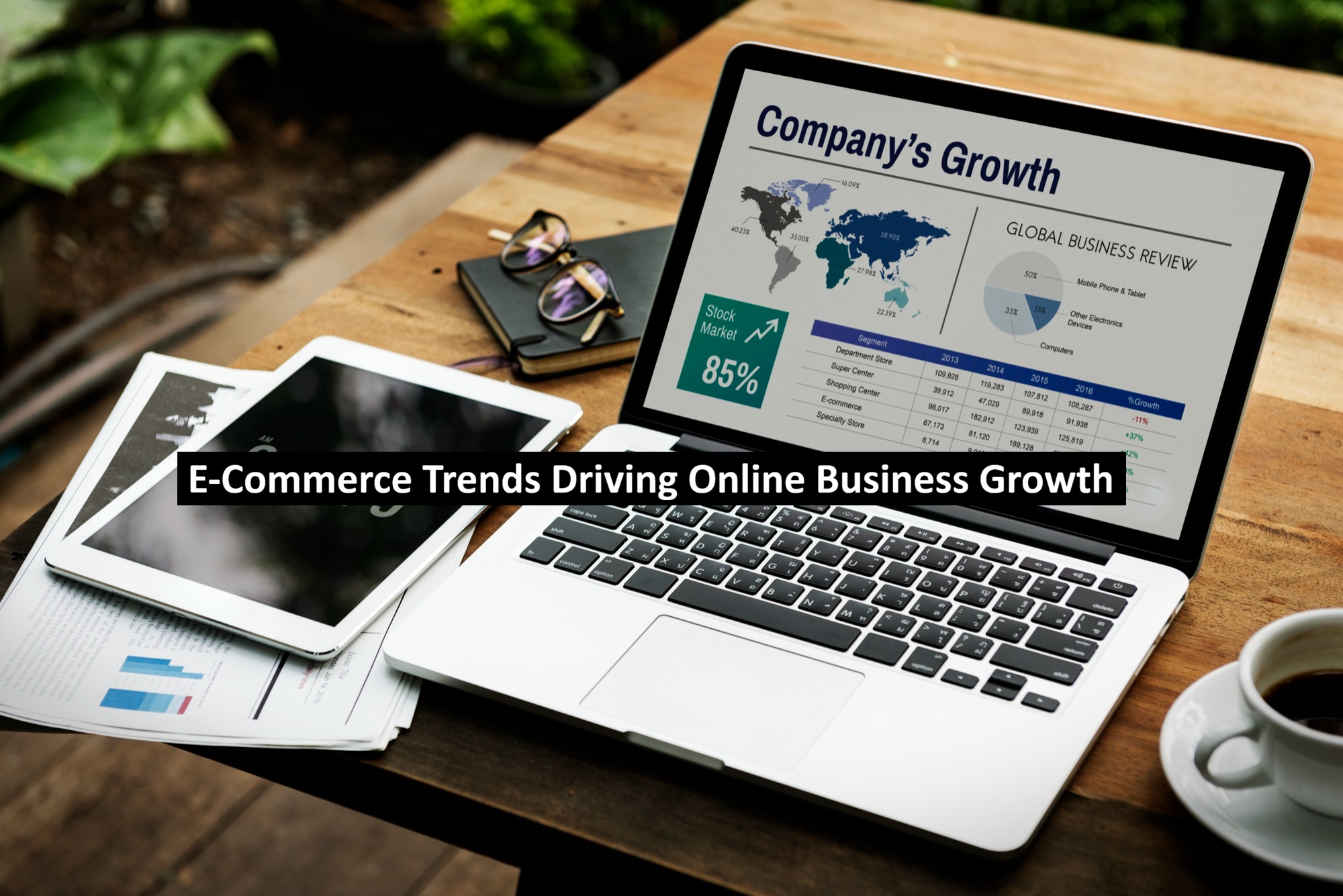
E-commerce has already and will continue to change how businesses sell products and how customers buy them. Developing digital payments, technology from mobile phones and the Internet as well as optimizing logistics, online marketing allows businesses of all sizes to access markets beyond their original geographic borders.
Meanwhile, shifting consumer expectations are driving online businesses to offer fast delivery times, personalized experiences, easy payment processes, and integrated multichannel experiences. Businesses that recognize the rise of the trend can adapt their online strategies and embrace new opportunities.
Artificial Intelligence and Personalization
Businesses rely heavily on artificial intelligence now, particularly when shopping online. Online stores use AI to examine the searching activities, buying history of users and the likes to determine what they want to buy.
AI chatbots can additionally answer common queries, respond to shop customers, as well as address questions after organisation hours. As these systems continue to evolve, firms will have the ability to supply better experiences for clients while lightening the concern associated with these typical support tasks.
Read: What an AI Sales Closer Should Do Before Asking for the Sale
Personalized Shopping Experiences
“Today, online customers come to expect the retailers to know what they like, whether that’s a targeted product recommendation on a webpage, or getting just the right promotional price, a personally crafted e-mail, or a search that fits just what’s on their minds,” explains the retail expert.
Personalization also enables companies to increase conversion rates. Because a company can present more relevant products on the website, rather than just broad promotions, conversions will go up.
Mobile Commerce Growth
The smartphone has an increasing role in the e-commerce path. People search, compare, read the opinion of other customer and finish the buy on the device itself.
In response, they’re using smart phones for websites and applications, and are opting for a simple website structure, in turn, a straightforward purchase, to minimize any kind of hassle from a mobile browsing trip.
Social Commerce
Social platforms are more closely linked to e-commerce, with brands using short videos, influencers, live shopping streams and shoppable posts to display products.
It helps consumers identify the product while scrolling content, as well as the potential to shorten the process to the product’s purchase once they are discovered. It’s one more channel that brands can interact with prospects.
Digital Payment Innovation
As consumers embrace shopping online, the way people pay during the checkout process is evolving. Whether it’s through the use of digital wallets, making instant online payments or utilizing buy-now-pay-later(BNPL)schemes, a range of modern payment options is offering a more flexible checkout experience for consumers.
Businesses that enable smooth and simple payment services will experience decreased cart abandonment. Fraud prevention and data security measures are crucial alongside the ongoing migration to digital payments.
Omnichannel Retail
As customers jump between websites, mobile apps, social media channels, physical stores, and other touch points on their journey to buying a product, omnichannel strategies attempt to make the customer experience seamless.
Companies will have the ability to link inventory, customer information, promotions, and support services seamlessly across all channels. As customers traverse these channels, continuity will not be lost.
Faster Delivery and Logistics
Speed of delivery has also become a decisive element in a buyer’s online purchasing choice. Today, many e-tailers are setting up automated warehouse operations, efficient inventory management, delivery route optimization tools and developing local fulfillment hubs.
Sustainable E-Commerce
Online shoppers are becoming more and more environmentally conscious. Businesses have started to look into factors such as recyclable packaging, delivery methods and sustainable sourcing to lower the carbon footprint.
Online Retail Buyers: Retail business online purchasers are increasingly mindful of earth issues; these organizations are inspecting biodegradable packing, streamline distribution centers, mindful obtainment and different measures to minimize carbon footprint. For businesses managing finances and investments alongside e-commerce operations, understanding what happens to different assets during inflationary periods can also help with broader financial planning and long-term decision-making. By operating sustainably, your brand image to customers could actually be enhanced to shoppers choosing for products that take the environment into consideration.
Voice and Visual Search
Consumers are adapting and shifting how and where they are searching for products with voice assistant technology and image-based search gaining significant traction. In order to get started with image based search on your store, all you have to do is click on the search box for images. Visual search simply permits the visitor to search for products by uploading the image, or via the use of some picture, where you can retrieve products that bear similarity to the image you gave with voice search where it can search things based on people’s speech.
Online businesses can still hold on to their positions as search behavior shifts. All they have to do is simply optimize their product descriptions, images, structured data as well as otherdigital marketing.
Automation in E-Commerce
Automation can reduce the time your business spends on the more common, mundane tasks. Order processing, updating inventories, basic customer support, segmenting customers and basic email communication can be all supported by automation.
Reducing the manual workload leaves your people to focus on strategising, developing products, looking after customers etc – those tasks which truly need human intelligence.
Future of Online Business Growth
As technology continues to evolve so too will e-commerce, as will consumer desires. AI, mobile shopping, social commerce, digital payments, automation and modern logistics will be key enablers of online commerce.
By integrating technology with quality customer service, seamless operation, safe transactions and relevant product experience, online businesses will succeed in building sustainable customer relationships. The successful businesses in the online arena will be those who embrace future trends with the customer at the core of their digital business strategy.
Author’s Bio:
Lalit is a freelance content writer, blogger, and digital marketer with 6 years of experience. He writes clear, engaging content on europe E-Commerce market, SEO, technology, business, education, and market trends, making complex topics easy to understand and apply.