
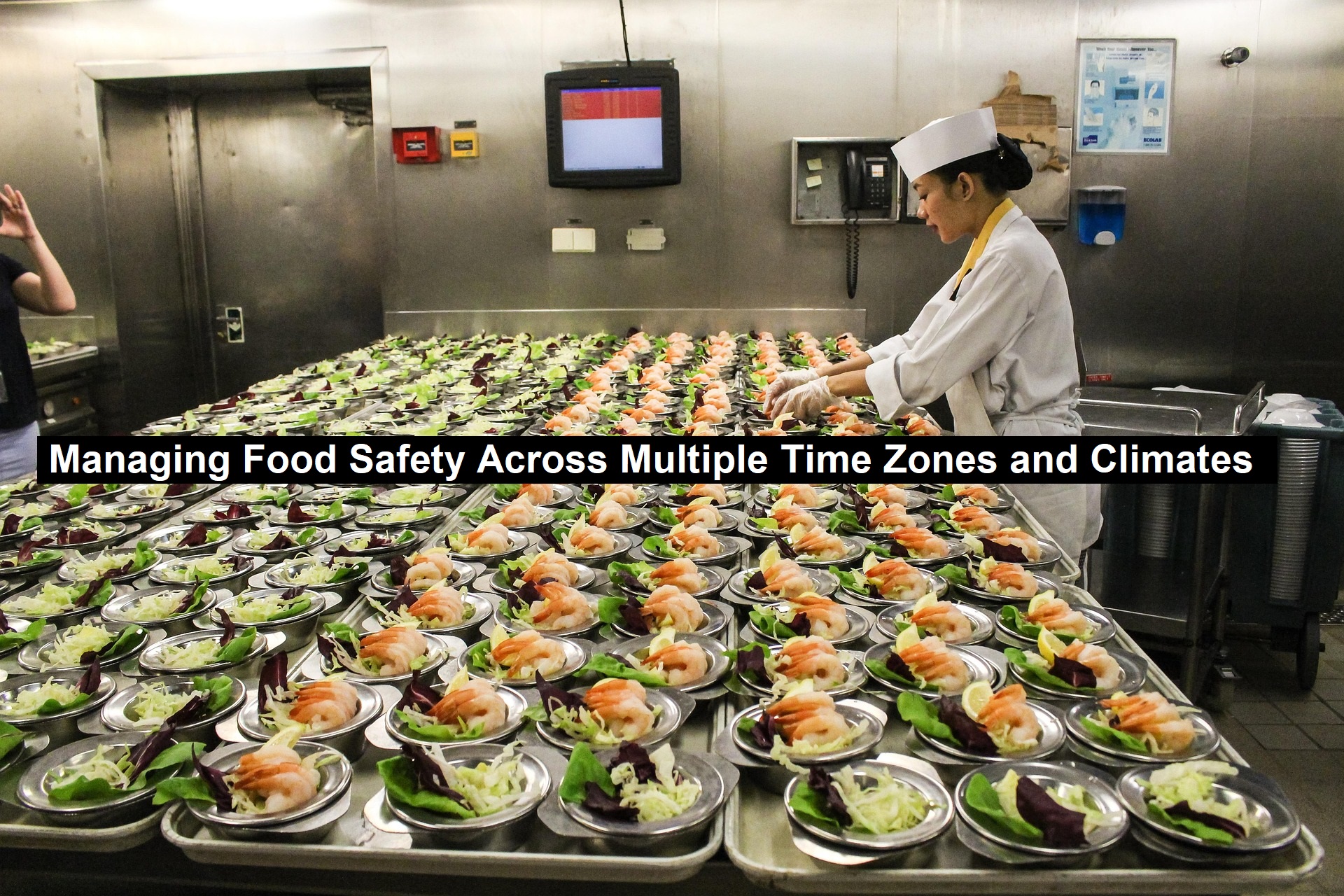
Food safety on vessels operating international routes presents challenges that land-based catering operations rarely encounter. Ships and ferries cross climate zones regularly, moving from tropical to temperate waters and back again within days. Each change in ambient conditions brings different storage challenges and different risks to the integrity of onboard food supplies.
For catering teams managing galleys on cruise ships and ferries, maintaining consistent food safety standards across these varying conditions requires careful planning, robust systems and an understanding of how environmental factors affect everything from storage temperatures to ingredient shelf life. The stakes are high. Foodborne illness outbreaks at sea can spread quickly in enclosed environments, disrupt operations and damage a vessel’s reputation. Effective food safety management across time zones and climates is therefore essential to protecting guest and crew health whilst maintaining service continuity.
Understanding the Impact of Climate on Food Storage
Temperature fluctuations are one of the most significant threats to food safety during maritime operations. Provisions loaded in one climate zone must remain safe as the vessel moves through regions with vastly different temperatures and humidity levels. Refrigeration systems on board are designed to maintain stable temperatures regardless of external conditions, but they operate under considerable strain when ambient temperatures rise.
Galleys restocking in hot climates face particular risks during the transfer of goods from shore to ship. Even brief exposure to high temperatures during loading can compromise perishable items, particularly dairy products, fresh seafood and prepared foods. Catering managers must work closely with port agents and suppliers to ensure goods are transported in refrigerated vehicles and that loading schedules minimise time spent outside controlled environments.
Humidity also plays a role. High humidity accelerates spoilage and encourages mould growth, particularly in dry goods storage areas that may not be climate-controlled to the same extent as cold rooms. Conversely, very dry climates can affect packaging integrity, causing some materials to become brittle or compromising vacuum seals. Regular inspections of storage areas and packaging conditions help identify problems before they escalate.
Read: Driving Change in Business: Why Behaviour Matters More Than Strategy
Managing Provisioning Schedules Across Time Zones
Operating across multiple time zones creates logistical complexity for catering teams. Provisioning schedules must account for differing local regulations, supplier availability and port operating hours. Vessels arriving at new ports may find that fresh produce markets operate on completely different schedules, or that certain suppliers require advance notice that spans multiple time zones.
Effective planning means anticipating these variations and building flexibility into provisioning schedules. Catering managers increasingly use digital systems to track supplier performance, delivery windows and local requirements across different regions. This allows them to plan restocking well in advance and identify backup suppliers in case of delays or quality issues.
Time zone differences also affect the shelf life calculations for perishable goods. Items provisioned in one region and stored for several days whilst crossing time zones may technically still be within use-by dates, but the cumulative time since production must be carefully tracked. This is particularly important for items like fresh fish, soft cheeses and prepared salads, where even a day’s difference in storage time can affect safety and quality.
Many catering operations now use batch tracking systems that record not just the expiry date but also the exact time and location where items were loaded, providing a complete picture of an ingredient’s history.
Adapting HACCP Systems to Variable Conditions
Hazard Analysis and Critical Control Points (HACCP) remains the foundation of food safety management in maritime catering, but its application must be adapted to account for the unique challenges of operating across different climates and jurisdictions. Critical control points that might be straightforward in a static land-based kitchen become more complex when environmental conditions are constantly changing.
Temperature monitoring becomes more demanding when refrigeration units must work harder in tropical waters and may operate differently in rough seas when doors are opened more frequently or when power supply fluctuates. Continuous temperature monitoring with automated alerts is essential, allowing galley teams to respond immediately if any storage area falls outside safe parameters.
Another critical control point is the receiving of goods. In some ports, suppliers meet international standards and provide full traceability documentation. In others, standards may be less consistent, requiring more rigorous inspection and testing by the ship’s catering team. This means HACCP plans must include variable verification procedures depending on the port of call and the reliability of local suppliers. Training staff to recognise quality issues during receiving, regardless of packaging or labelling variations, is an important part of maintaining standards across regions.
Ingredient Substitution and Menu Flexibility
Climate and geography don’t just affect storage. They also influence what ingredients are available at different ports. Vessels provisioned in different regions will have access to different fresh produce, dairy products and protein sources. Maintaining food safety standards whilst adapting menus to local availability requires careful ingredient assessment and, where necessary, substitution planning.
Catering managers must evaluate whether substitute ingredients meet the same safety standards as the originals. This involves understanding local food safety regulations, checking supplier certifications and conducting sensory evaluations. Some regions have strict controls on meat and dairy production, whilst others may have less comprehensive oversight. When sourcing ingredients in less regulated markets, additional verification steps such as supplier audits or third-party testing may be necessary.
Menu flexibility also plays a protective role. By designing menus that can adapt to what’s available and safe at each port, catering teams reduce the risk of relying on substandard or questionable ingredients. This approach requires close collaboration between executive chefs, catering managers and procurement teams to ensure that safety is never compromised in the pursuit of menu consistency.
Training Teams for Variable Conditions
Galley staff working on vessels that cross multiple climate zones need training that goes beyond standard food safety procedures. They must understand how environmental conditions affect food quality, recognise the signs of temperature abuse and know how to respond when conditions deviate from the norm. This includes understanding the risks associated with different climates, from faster bacterial growth in warm, humid conditions to the challenges of maintaining frozen goods in extreme heat.
Regular scenario-based training helps prepare teams for the realities of maritime catering. Simulating situations such as refrigeration failure in tropical waters or delayed provisioning in a remote port allows staff to practice their response and reinforces the importance of vigilance. Cross-training is also valuable, ensuring that multiple team members understand critical food safety procedures and can step in if needed, particularly on long voyages where fatigue and shift patterns can affect consistency.
Final Thoughts
Managing food safety across multiple time zones and climates demands a proactive, adaptable approach. It requires robust systems, continuous monitoring and well-trained teams who understand that the variables they face are part of maritime catering’s operational reality. As vessels continue to serve increasingly diverse routes and guest expectations for quality remain high, catering teams must stay ahead of the challenges that come with operating in constantly changing environments.
The maritime catering sector has made significant advances in recent years, with digital tracking, improved refrigeration technology and stronger supplier networks all contributing to safer, more reliable food operations. As the industry continues to evolve, the focus on food safety will remain central to delivering the high standards that guests and crew expect, regardless of where in the world a vessel happens to be.