
Have you ever wondered how some startups grow seamlessly, while others continue to spend time and money without actually developing? It’s like two individuals watering their plants. One assumes the required amount of water is available. The other examines the ground and the sunshine and adjusts. The latter plant nearly always grows better.
Over the years, most startups guessed their way to grow. They launched extensive campaigns, attempting to reach everyone, and hoped that something would be effective. However, that is no longer the way in the modern world. Markets are saturated, customer demands are increasing, and acquiring new customers has never been so costly. The only way to grow now is to be smart and not busy.
This is where true data can make a difference. According to McKinsey, companies that use customer analytics are 23 times more likely to win new customers than those that do not.McKinsey identified that intelligent application of marketing analytics has the potential to recover or repurpose 15 to 20 percent of marketing expenditure to drive better returns. Some startups have even reduced their acquisition costs by 50% by employing a data-driven approach.
The interesting point is that marketing data is no longer exclusive to marketers. It is also becoming a powerful tool among sales teams. It reveals the most promising prospects, their interests, and their readiness to take any action. Rather than making assumptions, teams will be able to focus on the right individuals and engage in discussions that lead to sales.
The initial evolution of Airbnb is an excellent case study. The team analyzed the usage of the platform by people and they realized that homes with professional photos received much higher bookings. In response, they provided hosts with free photography services. This data-driven, straightforward measure earned the trust of guests and increased the number of bookings, which contributed significantly to the company’s rapid expansion.
In this blog we are going to discuss how startups can sell smarter using marketing data. We will learn how to reach the right audience, understand their story, personalize our outreach, and continually improve in the long term.
1. Define Your Best Customers
Now that we understand the importance of data for better growth, the next thing is to decide who’s worth focusing on. People who visit your website or see your product aren’t all suitable for your business. The first step to effectively translating marketing data into better sales is to identify those who really matter.
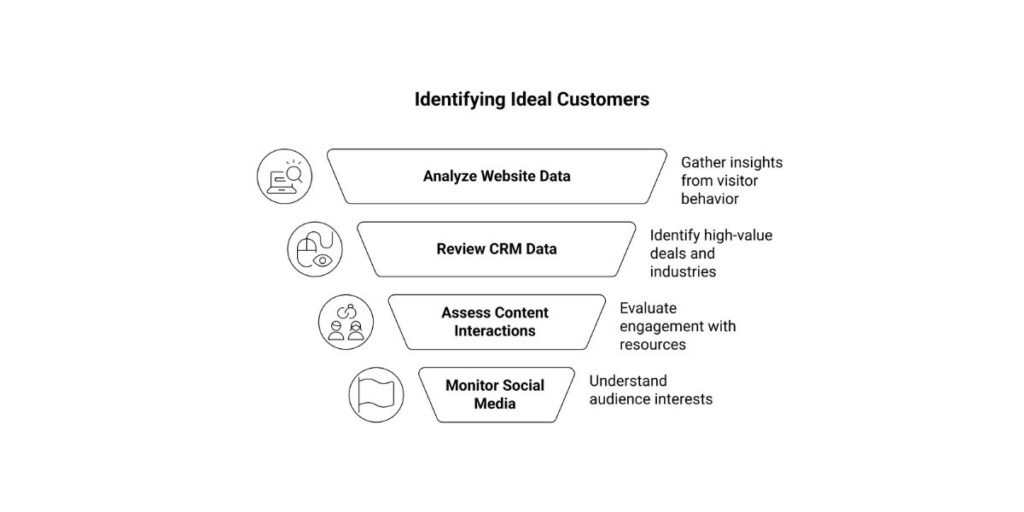
In the previous section, Airbnb used data to concentrate on what really mattered to bookings. This exact concentration is required when identifying ideal customers. Rather than relying on fuzzy adjectives, startups can paint a clear, data-driven picture of their best customers. It has been reported that companies with a well-defined Ideal Customer Profile have a 68 percent higher win rate, demonstrating the power of knowing who to target.
Through website analytics, one can gain insights into the geographic locations of valuable visitors, their time spent on specific pages, and the paths that lead to meaningful engagements. The CRM data complements it by highlighting industries or company sizes that move quickly through the pipeline and bring higher-value deals. Aberdeen research found that firms deploying modern data solutions see net conversion rates that are 25 percent higher, underscoring the value such clarity brings.
Content interactions give deeper insights. People who register for webinars, download eBooks, or otherwise regularly interact with your resources are sending clear signals of interest. Social media activity can also indicate what topics interest the right audience. These common patterns, over time, will begin to reflect the characteristics and behaviours of your most profitable customers, creating a clearer, more trustworthy picture than mere guessing.
In a study, it was found that 71 percent of companies that surpassed their financial targets had documented and data-informed profiles. However, very few companies without such models achieved the same level of success. Slack was a practical example of this phenomenon in the early days. They conducted a product data study of small- and medium-sized tech teams, finding that individuals who sent a specific number of messages within the first two weeks were significantly more likely to convert into paying customers. By identifying these accounts, they gave their sales team an obvious mantra and grew rapidly.
Read: Evaluating the Price vs Value of Grove Cranes: Is it a Worthy Investment?
2. Map Their Journey to Find the Right Moments
After identifying your ideal customers, determine the purpose and timing of their purchasing decisions. Targeting the right people helps you to narrow down your focus but understanding their journey provides timing and context. This is actually where marketing data will shine.
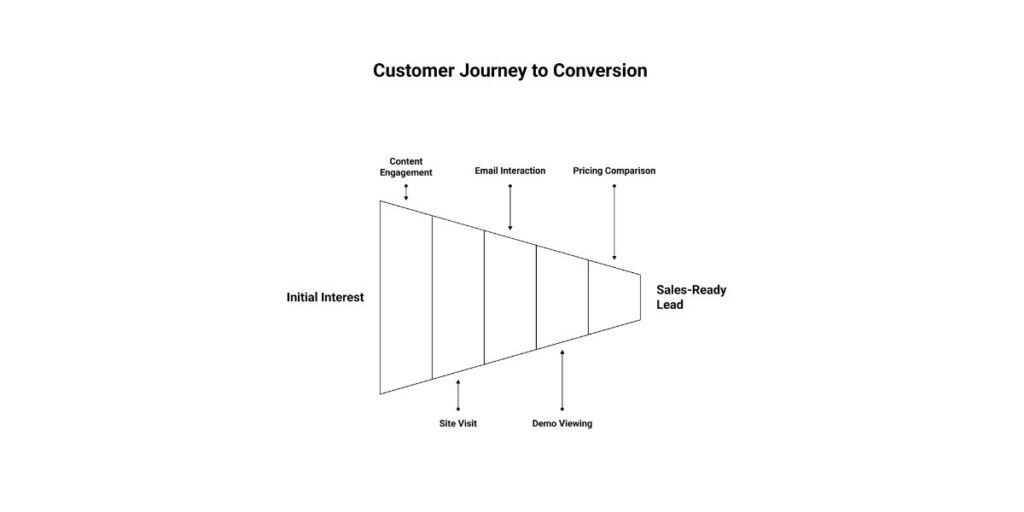
In the previous section, we looked into how patterns can suggest who is most likely to become a customer. The same patterns can reveal how people move from interest to action. Rather than thinking in a funnel-like shape, customer behavior may be better viewed as mapped in a landscape fashion, reflecting real behavior. People read your content, come back to your site, open your emails, watch your demos, and compare pricing in their own way.
Marketing analytics tools can help you make sense of these movements. By monitoring blog traffic, email activity, product page views, and demo requests, you begin to notice actual routes to conversion. These touchpoints help show what is most important to potential customers and when they are approaching a decision.
Lead scoring makes it even clearer. The score of a lead is increased for every meaningful action such as downloading a guide or attending a webinar. The larger the score, the easier it is for your sales team to step in with the right message at the right time. Forrester says companies with strong lead-nurturing practices generate 50 percent more sales-ready leads at 33 percent lower cost.
An excellent example of this in practice is HubSpot. The company follows with great interest every touchpoint its leads have with its content. Someone who downloads a beginner’s guide to SEO and then attends a webinar on advanced techniques would see a significant increase in their lead score. When the sales team makes contact, they already know what the lead is interested in, and so have a focused, high-value conversation that feels appropriate and timely.
3. Personalize Outreach to Drive Meaningful Conversations
We understood that knowing the why and when of customers’ decisions can lead sales teams to the right timing and context for selling. We must now integrate all of this into a singular focus on how to reach those customers with a message that actually connects. This is where personalization comes into play.
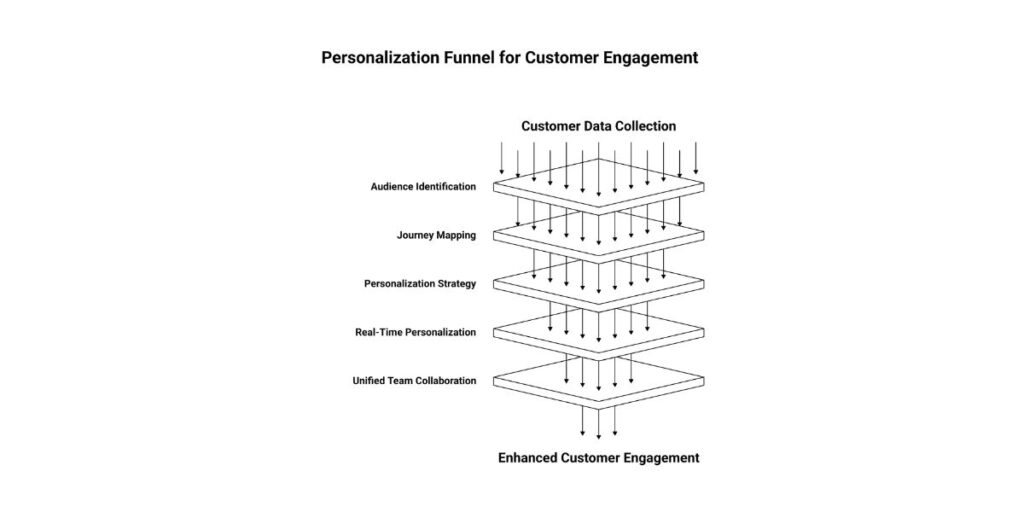
In earlier sections, we described how identifying the right audience and mapping their journey would give a clear view of who matters and how they behave. Personalization turns that understanding into meaningful conversations. The simple touches of using someone’s name, remembering someone’s birthday, or sending a reminder via SMS even once are no longer enough. Today, consumers expect messages that are thoughtful and relevant, conveying a sense of understanding.
That’s what marketing data can do. Every little move a prospect makes leaves a clue: title, pages visited, things downloaded, and questions asked at webinars provide data that can inform outreach designed with them in mind. Rather than sending the same generic message to someone the sales team can notice those signals, they will build conversations that feel much more personalized and relevant.
A web personalization platform reinforces this strategy by gathering behavioral and firmographic data in real-time and providing customized experiences directly on the webpage itself. It provides sales teams with a clearer understanding of each visitor’s interests, enabling them to follow up with targeted messages that can continue the journey.
The results speak for themselves: HubSpot’s data show that personalized calls to action outperform generic ones by 202 percent. Epsilon states that 80 percent of buyers are more inclined to purchase from a company that offers personalized experiences. Salesforce reports that 76 percent of customers expect companies to understand their needs. Personalization is no longer a nice-to-have; it is an essential way to build trust and drive conversions.
To make this work, the sales and marketing departments should function as a single unit. Data collected via marketing platforms should seamlessly integrate with sales tools to prevent any data loss. Once the teams share the same data, sales will build upon the journey customers have experienced, rather than starting from scratch.
When combined with personalization based on who, why, and when, outreach becomes far more meaningful and aligned to what customers actually care about.
4. Use Performance Data to Continuously Optimize
Personalization contributes to more effective conversations with customers, although even the most effective outreach requires ongoing fine-tuning. The most intelligent companies consider selling a process that constantly evolves, and this is where performance data is required.
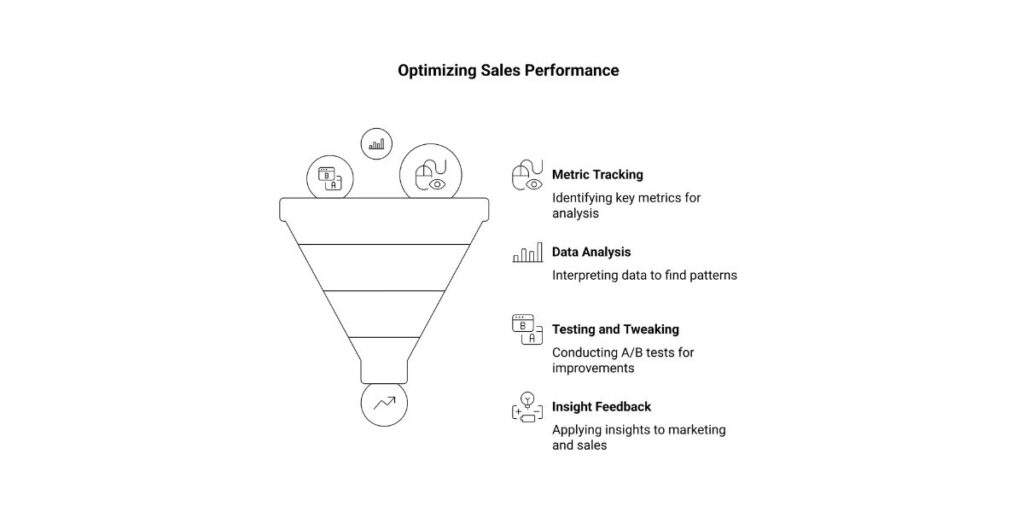
Performance data reveals what works and what needs improvement, as well as where minor adjustments can yield significant results. Tracking the right metrics is the starting point. Conversion rates by channel, sales cycle length, customer lifetime value compared to acquisition costs, and deal velocity give a clear picture of how well each stage is performing. Regularly reviewing these numbers makes it easier to identify patterns and address areas for improvement.
Testing is also a significant activity. Minor tweaks in email subject lines or call scripts can affect action. Companies that have conducted A/B tests report that their conversion rates have improved by as much as 49 percent. Many are able to remove bottlenecks by studying their pipeline data, thus shortening their sales cycles by nearly 30 percent.
Also, the real power comes in feeding back insights into marketing and sales efforts. If leads from a certain ebook close faster, marketing can focus more on that topic. If a segment moves quickly through the funnel, sales can prioritize similar accounts. The whole thing becomes a loop in which both teams learn from each other and continually improve.
Even the smallest enhancements add up. A 15% improvement across five major conversion points – lead volume, win rate, and pricing – can double revenue. Treating optimization as a habit rather than a one-time fix is what really drives steady, long-term growth. Using performance data in this way enables startups to refine their approach at each stage of the sales cycle, enabling ongoing performance improvement over time.
Conclusion
Converting data to smarter selling begins with the fundamentals. Identifying the correct customers, understanding their path, reaching them personally, and refining it with performance data form a sales process that continually improves. One step leads to the next, enabling teams to make clearer decisions and work quickly in a competitive environment.
The companies that succeed are those in which data serves as a shared language across marketing and sales. Leaders are expected to dismantle silos and foster a culture where wisdom informs all actions. Working with data, teams are concentrated, regular, and expansive in growth.
Author’s Bio:
Vidhatanand is the Founder and CEO of Fragmatic, a web personalization platform for B2B businesses. He specializes in advancing AI-driven personalization and is passionate about creating technologies that help businesses deliver meaningful digital experiences.