
For businesses, the UK has been a strange place for the past decade or two. If you’re a London-based SME in the financial services industry, then business has probably been pretty good. Demand has been high domestically and internationally, and growth has been consistent. On the other hand, if you’re selling goods in the north of England, then you’re probably living in a different reality altogether.
But one area where UK businesses have been finding success up and down the country has been in the sustainable energy sector. It’s gathered serious steam over the years and is now enormous, dominating the energy landscape and building new jobs in dozens of rapidly growing different sub-sectors.
So, in this article, I want to tell you all about some of the most prosperous subsectors in Britain’s fast-growing green economy:
Offshore Wind
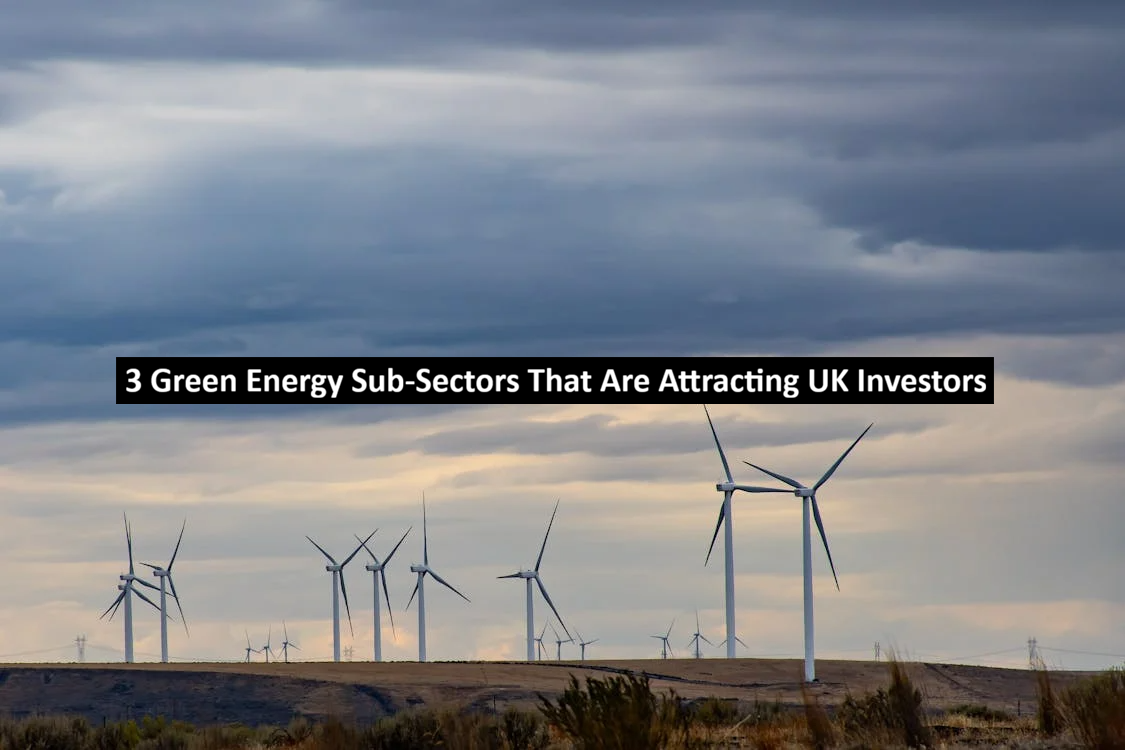
It’s hard to think of any renewable sectors that have taken off in the UK quite like offshore wind. The country’s long coastlines, ever-reliable sources of wind, and supportive political policies prime the UK to become a global leader in this particular field.
Over the course of the past 20 years, more and more offshore wind farms have cropped up all over the North Sea, with turbines that have grown taller and more powerful. These farms already generate enough energy to power millions of homes, along with essential UK supply chains. In the meantime, ports have been upgraded to facilitate further growth. They are being upgraded to build turbines, while specialised ships are transporting equipment.
The UK is now a global leader in offshore wind capacity – even with the work already done, we’ve barely scratched the surface when it comes to our potential capacity.
Read: Transform Your Sales Strategy: Leveraging Salesforce Spiff for Incentive Compensation Management
Hydrogen Power
Hydrogen has rapidly become one of the most talked-about energy technologies in the UK, especially in relation to its renewable form. Yes, we can now produce hydrogen using renewable electricity. This ‘green’ hydrogen is made through electrolysis, a process in which water is split up into hydrogen and oxygen using renewable electricity, typically from wind or solar power.
Hydrogen can be used to store excess renewable energy, power heavy machinery, and fuel transportation. For industries that are tricky to power directly with electricity or other renewables, hydrogen can offer an attractive low-carbon alternative that’s incredibly efficient.
Investors have been flocking to sub sector since the government has announced ambitious targets. As a result, new projects and pilot schemes are launching all over the country, especially in industrial clusters in places like the Humber and Teeside, where companies are exploring hydrogen production on a much larger scale. On the flip side, researchers and energy companies are hard at work putting new infrastructure to the test.
Water Infrastructure
There’s a symbiotic relationship between energy and water infrastructure – especially when we’re focusing on green energy and industrial decarbonisation. Hydroelectric facilities, the aforementioned hydrogen production plants, and water management technologies all play critical roles when it comes to ensuring that systems are running as efficiently as possible.
Companies like Xylem have contributed to this vibrant subsector by creating advanced water tech that is used in various industries, supporting processes like water treatment and system monitoring – essential for companies that are reliant on having large volumes of water (like a hydroelectric facility).
The water infrastructure subsector is attracting investment because efficient water management improves the sustainability of energy projects while also reducing operating costs and environmental impact.
Heat Pumps
It might not come as a surprise to learn that, in a country cursed with cold, miserable weather, heating the UK’s buildings accounts for a huge share of our energy use. Consequently, low-carbon heating alternatives have become a lucrative subsector for investors and owners.
Instead of generating heat directly, heat pumps transfer thermal energy from the air, ground, or water into buildings. The process itself is guilty of using electricity, but is efficient as it is capable of delivering several units of heat for every unit of power consumed.
The market is currently going through a period of rapid growth, largely because of government incentives and a broad increase in awareness of energy efficiency, as installers and manufacturers are growing the scale of their operations to keep up with demand. In doing so, many are also finding ways to innovate, as models become even more efficient and better suited to UK housing, which is notoriously well-insulated compared to our European neighbours.
Closing Thoughts
The UK’s green energy economy isn’t defined by any one industry or technology at the moment. Rather, it’s made up of dozens of innovative subsectors which contribute to a cleaner, more efficient, and more resilient future.
Whether it’s an SME working in offshore wind or a billion-pound behemoth, like Xylem, creating ultrapure water monitoring systems, the private sector is building on the foundation of public sector investment and government incentives by turning ambitious policy into tangible results, inventing new technologies, scaling up clean infrastructure, and creating more skilled jobs in the meantime.